
Nano reef equipment list: what you actually need
A practical equipment list for a small reef tank: light, flow, heater, salt, rock, sand, test kits, and auto top-off.
A nano reef is a small saltwater tank, usually in the 10–30 gallon range, with live rock and corals. The appeal is the footprint. The catch is that a few gallons of evaporation or a heater that sticks on will move temperature and salinity much faster than they would in a big tank. This list is the equipment that actually matters, using gear we carry, plus a few honest notes about what we do not sell.
What you’ll need

Compact reef light
AI Hydra Edge HD LED Reef Lightif you want a slightly larger fixture
From $399.99
Choose size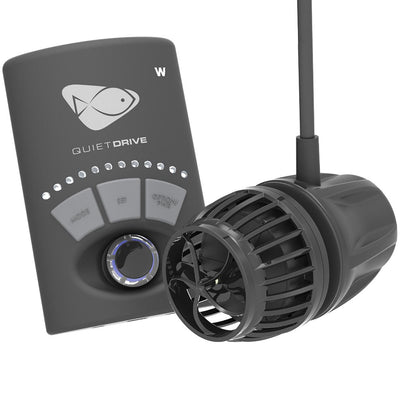

Heater
Sicce SCUBA ContactLess Submersible HeatersSicce SCUBA, including a 50 watt size
From $52.99
Choose size


Test kits
Tropic Marin Compact Lab Essentials Test Kitalkalinity, calcium, ammonia, nitrite, nitrate and phosphate as you go
$78.39
Nitrifying bacteria
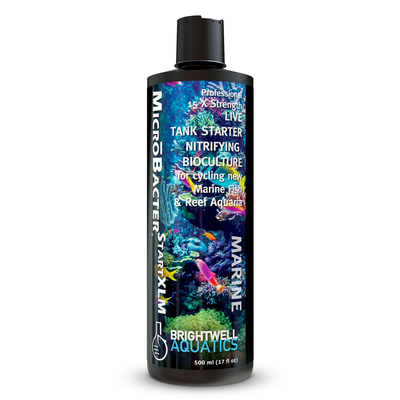
Brightwell Aquatics MicroBacter Start XLM Marine Tank Starterfor the cycle
From $16.49
Choose size
We do not sell the aquarium itself. Many nano reefs start in an all-in-one tank with a rear filter chamber; others use a small display and a tiny sump. Buy a tank that is rated for the weight of water and sits on a level, sturdy stand away from sun and vents.
Light
Corals need a reef-capable LED, not a generic freshwater bar. For a compact tank, the AI Hydra Prime 16 HD is a small modular fixture. If you want more coverage, the AI Hydra Edge HD comes in 44HD and 68HD sizes. Start at a moderate intensity and ramp up after corals are in. Our reef light guide walks through coverage and control in more detail. Match the fixture to the length of the tank, and use the mount or hanging kit made for that light. AI Hydra Prime 16 HDView product →
Flow
A return pump moves water through the back chamber or sump. A separate wave pump keeps the display from going stale. For a nano, the Sicce Voyager Nano is offered as a 1000 (270 gph) and a 2000 (530 gph). Point the flow across the rock, not straight at soft corals. If you want a magnet-mounted propeller pump, the EcoTech VorTech line includes the MP10wQD, with MP40wQD and MP60wQD for larger systems. Our pump guide covers how return pumps and wave pumps differ. A small return option we carry is the Sicce Syncra Silent Nano (110 gph), which suits a compact all-in-one or a very small closed loop — not a large sump. Sicce Voyager NanoView product →
Heater, salt and top-off
Temperature swings hit a small tank hard. We carry Sicce SCUBA ContactLess heaters from 50 watts up, and a preset SCUBA line as well. Use a separate thermometer and glance at it daily. If a heater fails on, a small tank can overheat quickly, so many reef keepers prefer a conservative wattage and a backup plan rather than one oversized heater.
Mix saltwater in a separate container, never by pouring dry salt into a tank with livestock. We default to Fritz RPM Reef Pro Mix. Check salinity with a calibrated refractometer. Our salt guide includes mixing amounts and a calculator.
Evaporation leaves salt behind, so salinity climbs as the water line drops. In a 20-gallon tank, losing half a gallon is a real swing. An auto top-off adds fresh RO/DI water to hold the level. The XP Aqua Duetto 2 is a dual-sensor unit; the XP Aqua Sumpless 2 is built for tanks without a sump; the AutoAqua Smart ATO Lifter is another option. Top off with RO/DI, not saltwater.
Rock, sand, cycle and tests
Build a stable rock structure first, then add sand around it. CaribSea Life Rock Nano Arches are sized for small tanks; Life Rock and Real Reef Rock work if you want more volume. For sand, Arag-Alive Special Grade is a common reef grain size.
Cycle the tank before fish or corals go in. Use a marine starter such as MicroBacter Start XLM and test ammonia and nitrite until both read zero. Our cycling guide has the step-by-step. After that, keep testing. A Tropic Marin Compact Lab covers the essentials; add phosphate and calcium kits as you start corals. See Testing your water.
A protein skimmer is optional on a lightly stocked nano if you change water on a steady schedule. If you want one, we carry Sicce Shark internal skimmers and the Simplicity DC in-sump skimmer for tanks that have the space. A Sicce Shark Pro Nano can handle mechanical filtration in an all-in-one chamber. Our filter media guide explains what to put in the socks or bags.
What you can skip at first
You do not need a calcium reactor, a four-head dosing pump, or a full aquarium controller on day one. Get temperature, salinity, flow and the cycle stable, then add corals slowly. When growth picks up, a simple daily supplement such as All-For-Reef is enough for many small mixed reefs — see our guide on how to dose All-For-Reef.
The full setup order for a first reef, including livestock timing, is in Setting up your first reef tank. This list is the shopping version of that plan, scaled to a small tank.
Orders ship in 1–2 business days, and shipping is free on orders of $35 or more. Most equipment is returnable for 365 days with free return shipping and no restocking fee. Opened chemicals, foods and medications are not returnable.
Not sure which pump or light fits a 20-gallon all-in-one? Ask us and we’ll help you build a short list.