
Setting up your first reef tank
A calm, step-by-step plan for a first saltwater reef: what to buy, what order to do it in, and when to add fish and corals.
A reef tank rewards patience more than spending. Most early problems come from rushing, not from the wrong gear. Here’s the order we recommend, with everything you need in one place.
What you’ll need



You’ll also need RO/DI water (salt makers recommend it for mixing saltwater), a clean bucket used only for saltwater, and a mixing pump.
Step by step
- Choose the tank and spot. Pick a level, sturdy stand away from direct sun and heating vents. A bigger tank is more forgiving because changes happen more slowly.
-
Mix saltwater outside the tank. Never add dry salt to a tank with livestock. Mix in a separate container with a pump running, heat it to tank temperature, then check salinity with a refractometer. Our salt guide covers mixing.
 Fritz RPM Reef Pro MixView product →
-
Aquascape with dry rock. Build a stable rock structure first, then add sand around it so rocks sit on the glass or a base, not on top of sand.
 CaribSea Life RockView product →
- Fill and start equipment. Add saltwater, then start the return pump, wave pump and heater. Let temperature and salinity settle before going further.
-
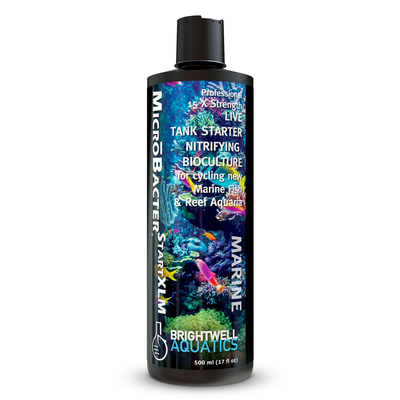
Cycle the tank. Add nitrifying bacteria and an ammonia source, then test ammonia and nitrite until both read zero. See Cycling a new tank.
 MicroBacter Start XLMView product →
- Light on a gentle schedule. Run the light at a moderate intensity at first. Bright light on a new tank tends to feed algae before corals are in.
- Add fish slowly. Start with one or two hardy fish. Add more over several weeks so the bacteria keep up with the extra waste.
- Add easy corals last. Once the tank is stable and testing steady, start with hardy soft corals before more demanding species.
Keep it simple
- Test often in the first few months and write results down. Trends matter more than a single reading.
- Change water regularly with freshly mixed saltwater. Tropic Marin, for example, suggests a weekly 10% change.
- Top off evaporation with fresh RO/DI water, not saltwater. Salt stays in the tank when water evaporates.
- Change one thing at a time so you can see what worked.
Common first-reef mistakes
- Adding fish too soon. Wait until ammonia and nitrite read zero, even if the tank looks ready.
- Chasing numbers. Stable parameters are healthier than “perfect” ones that swing day to day.
- Overfeeding. Feed what your fish eat in a short time. Extra food becomes nitrate and phosphate, and then algae.
- Too much light too early. Ramp up slowly once corals are in.
- Skipping a quarantine plan. Ask your livestock source how animals were kept, and add them one at a time.
Not sure what fits your tank size? Ask us; we’re happy to help you build a list.