
How to use Seachem Purigen
Seachem’s official Purigen dose, placement, and bleach regeneration steps, and how Matrix Carbon and PhosGuard fit in the same filter.
Short answer: how to use Seachem Purigen. Rinse the beads in freshwater, put them in a fine mesh bag (180 micron or less), and place the bag where water flows through it fast, such as a canister, media chamber or hang-on-back basket. Seachem says each 250 mL treats up to 250 US gallons for up to six months. When the pale beads turn dark brown or black, regenerate them with bleach and Seachem Prime using the steps below.
Seachem Purigen is a synthetic adsorption resin for fresh and saltwater. It is meant to remove organic waste before that waste is converted into ammonia, nitrite, or nitrate, and it polishes the water as it works. This guide follows Seachem’s published directions for dose, placement, and regeneration, and notes Matrix Carbon and PhosGuard where those official directions are useful alongside it. For a broader look at mechanical, biological, and chemical media, see Choosing filter media.
What you’ll need
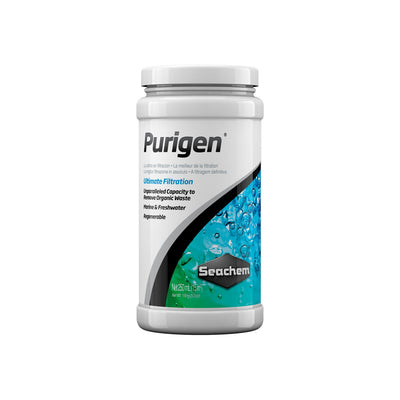
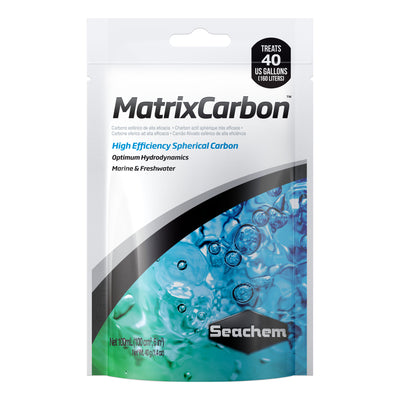
activated carbon, if you also want carbon in the filter; Seachem says the two can be used together
From $7.31
Choose size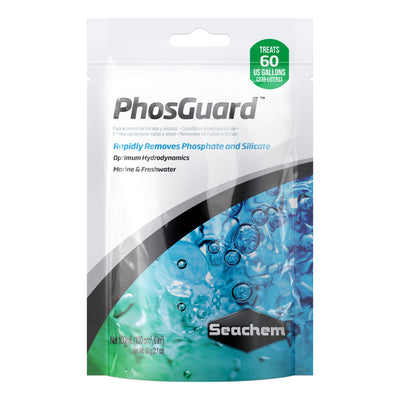

one hang-on-back filter with a media basket, if that is where you will place the bag
From $48.01
Choose size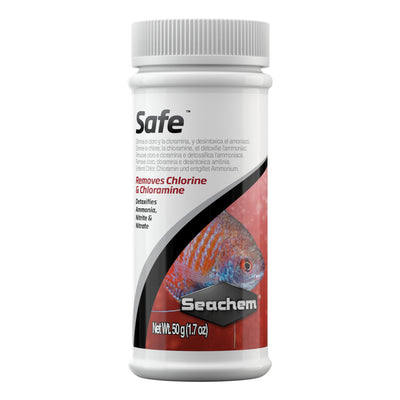
You will also need a fine mesh filter bag. Seachem specifies 180 micron or less, such as Seachem’s The Bag. Seachem says its coarser Zip Bags are not for resins, so do not use a Zip Bag for Purigen. A Zip Bag is fine for Matrix Carbon or PhosGuard. Rinse media in freshwater before it goes in the filter. Purigen does not replace a cycle, a water change, or a test kit — see Cycling a new tank and Testing your water.
Seachem’s published Purigen dose
From Seachem’s Purigen page: Seachem PurigenView product →
- Rinse before use.
- Use it in a fine mesh bag (180 micron or less).
- Place the bag where flow through the media is high: a canister filter, a media chamber, a box filter, or a high-flow area of a trickle filter.
- Each 250 mL treats up to 1,000 L (250 US gallons) for up to six months.
- It starts a pale blonde color. It is exhausted when the beads turn a pronounced dark brown or black.
Seachem also says Purigen’s effect on trace elements is minimal, that it will not lower general hardness (calcium and magnesium), and that it does not directly remove ammonia, nitrite, or nitrate already in the water. If nitrate is already high, Seachem recommends a partial water change and a biological media, not Purigen alone.
How to put it in the filter
- Rinse the beads in freshwater until the rinse water runs clear.
- Bag them in a fine mesh bag that meets Seachem’s 180-micron-or-less rating, and close the bag so beads cannot escape.
- Place the bag in a high-flow spot in the filter, not in a dead corner. In a hang-on-back filter such as a Seachem Tidal, that is the media basket; in a canister or sump chamber, put it where water has to pass through the bag.
- Watch the color over the following weeks. When the beads are dark brown or black, take the bag out and either regenerate the media or replace it. Do not wait for nitrate to tell you it is spent.
How Seachem says to regenerate it
Do this only if you are comfortable handling household bleach safely, in a well-ventilated area, away from children and pets, in a non-metallic container. Follow Seachem’s steps exactly. If you would rather not use bleach, replace the media instead.
From Seachem’s current Purigen directions and FAQ:
- Soak the exhausted Purigen in a 1:1 bleach-to-water solution for 24 hours in a non-metallic container, in a well-ventilated area, away from children. Use regular unscented 8.25% hypochlorite household bleach with no dyes. Do not use splash-less bleach or a “33% more concentrated” bleach. Seachem says those are the wrong form or strength.
- Rinse well, then soak for 8 hours in a solution of 4 tablespoons of Seachem Prime, or 16 grams of Seachem Safe, per cup of water. (Older bottles may still say 2 tablespoons of Prime; Seachem’s FAQ explains that was written for 6% bleach, which is no longer the common household strength. Use the 4-tablespoon figure with 8.25% bleach.)
- Rinse well again. For freshwater use, Seachem then says to soak for 4 hours in a solution of 2 tablespoons of a Seachem buffer (Discus Buffer or Neutral Regulator) per cup of water.
- Do not reuse it if you can still smell bleach or chlorine. Seachem says to repeat the Prime or Safe soak if you smell chlorine, and, if you are unsure, to soak a small sample in water and test that water with a chlorine test kit.
A few cautions that also come from Seachem: some amine-based slime-coat products can make regeneration unsafe or impossible (Prime and Safe are not in that group). Store unused or regenerated Purigen moist, in a little RO, DI, or tap water, so the beads do not dry, shrink, or crack.
For everyday Prime doses on a water change, see How to use Seachem Prime. The regeneration soak above is a much stronger Prime solution than a tank dose; do not pour that soak into the aquarium.
Where Matrix Carbon fits
From Seachem’s Matrix Carbon page: Seachem Matrix CarbonView product →
- 250 mL treats 400 L (100 US gallons) for several months. Seachem’s FAQ says 3–6 months is typical, but very dirty water can exhaust it in hours and very clean water can last several months.
- Rinse it, use it in a filter bag, and place it where flow through the carbon is high — the same kinds of filters listed for Purigen.
Seachem says Purigen is more selective than carbon for organics and is compatible with carbon. Using both can extend Purigen’s useful life. Use one bag for each media so you can tell when the Purigen has darkened and when the carbon should be replaced. Carbon is not regenerated with the bleach procedure above.
Where PhosGuard fits
If the problem is phosphate or silicate, that is PhosGuard’s job, not Purigen’s. From Seachem’s PhosGuard page:
- It may get warm when first wetted. Add the dry media to a double volume of freshwater (never add water, especially saltwater, onto dry PhosGuard), then rinse.
- Use 85 mL (1/3 cup) per 50 US gallons (200 L) of saltwater, or per 100 US gallons (400 L) of freshwater, in a bag, with good flow but not so much flow that the beads tumble against each other. Seachem does not recommend it in a tumbling media reactor, because that can make dust.
- Leave it in place for 4 days, then test phosphate or silicate. If the level has not dropped to around 0.02 mg/L, replace the media; if it has, leave it until the level begins to climb again. Seachem prefers continuous use of small amounts over occasional large amounts, and warns that dropping phosphate too fast can stress corals.
- It is not recommended in phosphate-buffered freshwater, because it will remove that buffer until it is saturated.
Purigen FAQ
How much Purigen do I need for my tank? Seachem rates 250 mL for up to 1,000 L (250 US gallons) for up to six months. That works out to about 1 mL per US gallon, so roughly 20 mL for a 20-gallon tank, 55 mL for a 55-gallon, or 75 mL for a 75-gallon.
Does Purigen remove ammonia or nitrate? Not directly. Seachem says it removes organic waste before bacteria turn it into ammonia, nitrite, and nitrate, so levels drop over time. It cannot pull out ammonia, nitrite, or nitrate that is already in the water.
Can I use Purigen in a new tank that is still cycling? Seachem’s answer is that it will not starve out established bacteria. But while a tank is new, the bacteria need as much waste as possible to cycle quickly, so Purigen works against a fast cycle. See Cycling a new tank.
Does Purigen expire? Seachem says sealed, unopened Purigen does not expire. Replace it if it smells rancid (a “fishy” smell is normal), has fully dried out, or has turned an unusual color such as grey or blue. White to cream to yellowish is normal.
Can I use Purigen with a slime-coat conditioner? Yes, but Seachem warns that amine-based slime-coat products bind to the resin and make it unsafe to regenerate. Prime, Safe, and Seachem StressGuard are not amine based.
Purigen or carbon? Seachem says Purigen removes organics better than carbon and works with carbon. Using both extends Purigen’s life. See Where Matrix Carbon fits above, or compare media in Choosing filter media.
Orders ship in 1–2 business days, and shipping is free on orders of $35 or more. Most equipment is returnable for 365 days with free return shipping and no restocking fee. Opened chemicals, foods and medications are not returnable.
If you want help matching a media volume to your filter, ask us through the contact form.